Photos & photography
Matcha Lake photos & photography guide
What Matcha Lake actually looks like — and how to come home with the shot rather than the disappointment. A gallery first, then how we would work the light and the water.
Last updated · How we keep this current
Short answer
How do you photograph Matcha Lake well?
Quick facts
- Best light
- Early morning; overcast or misty deepens the green
- Signature shot
- Reflection lines — trees mirrored in still water
- Also strong
- Boardwalk leading lines; a person for scale
- Green colour
- Seasonal, warm months, never guaranteed
- What ruins it
- Wind on the water, harsh midday sun, trampled edges
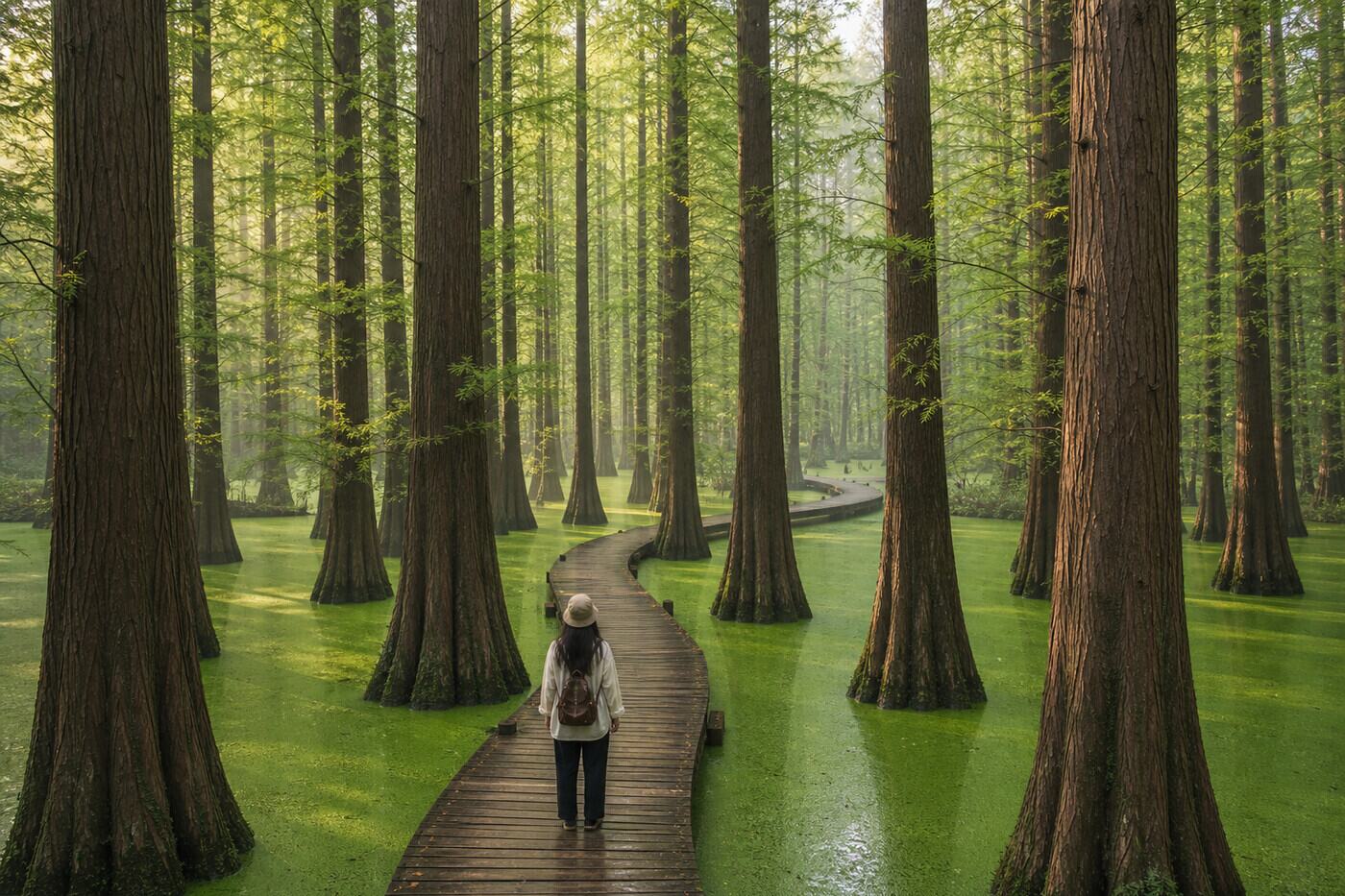
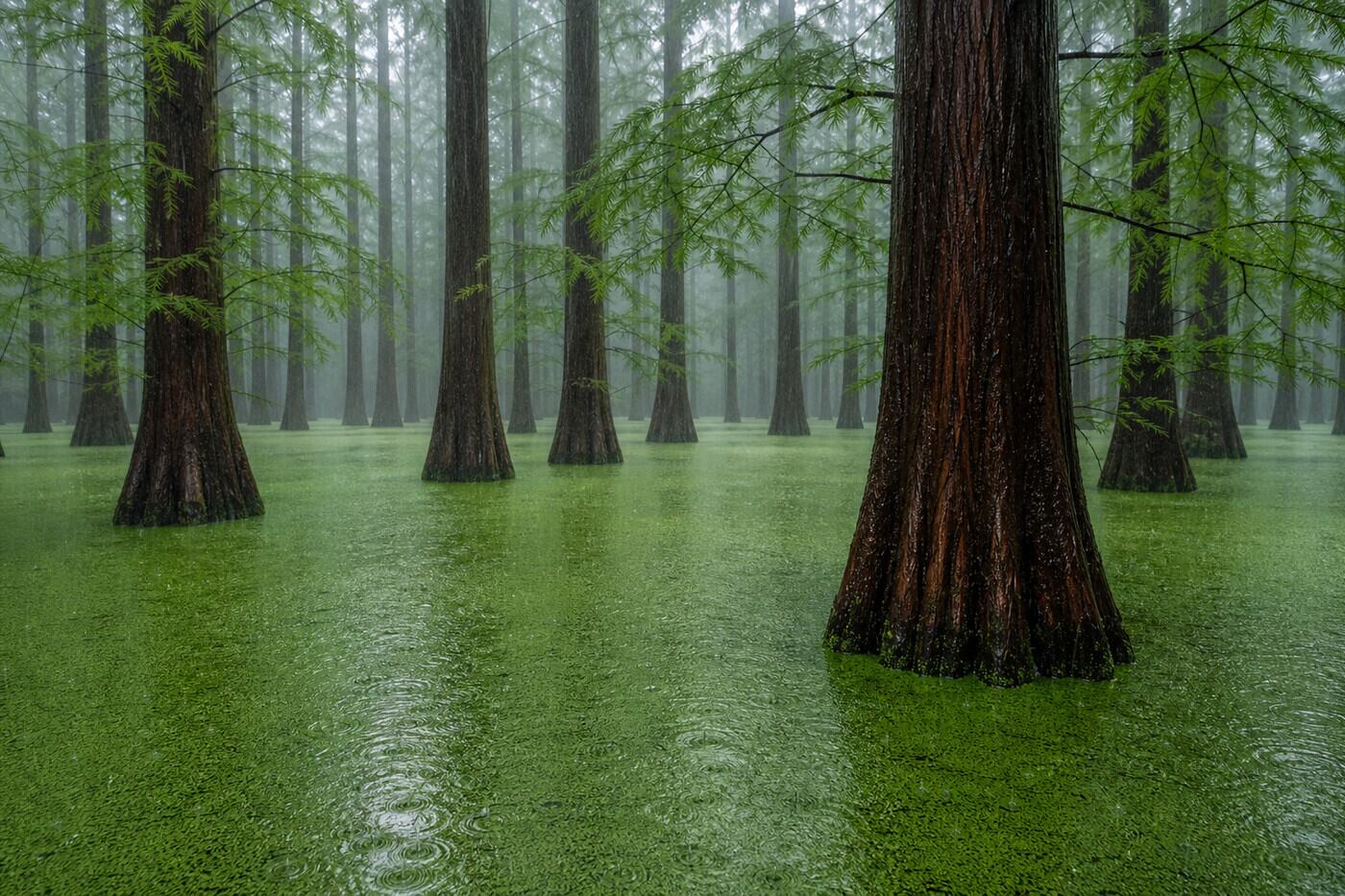
The shots worth planning for
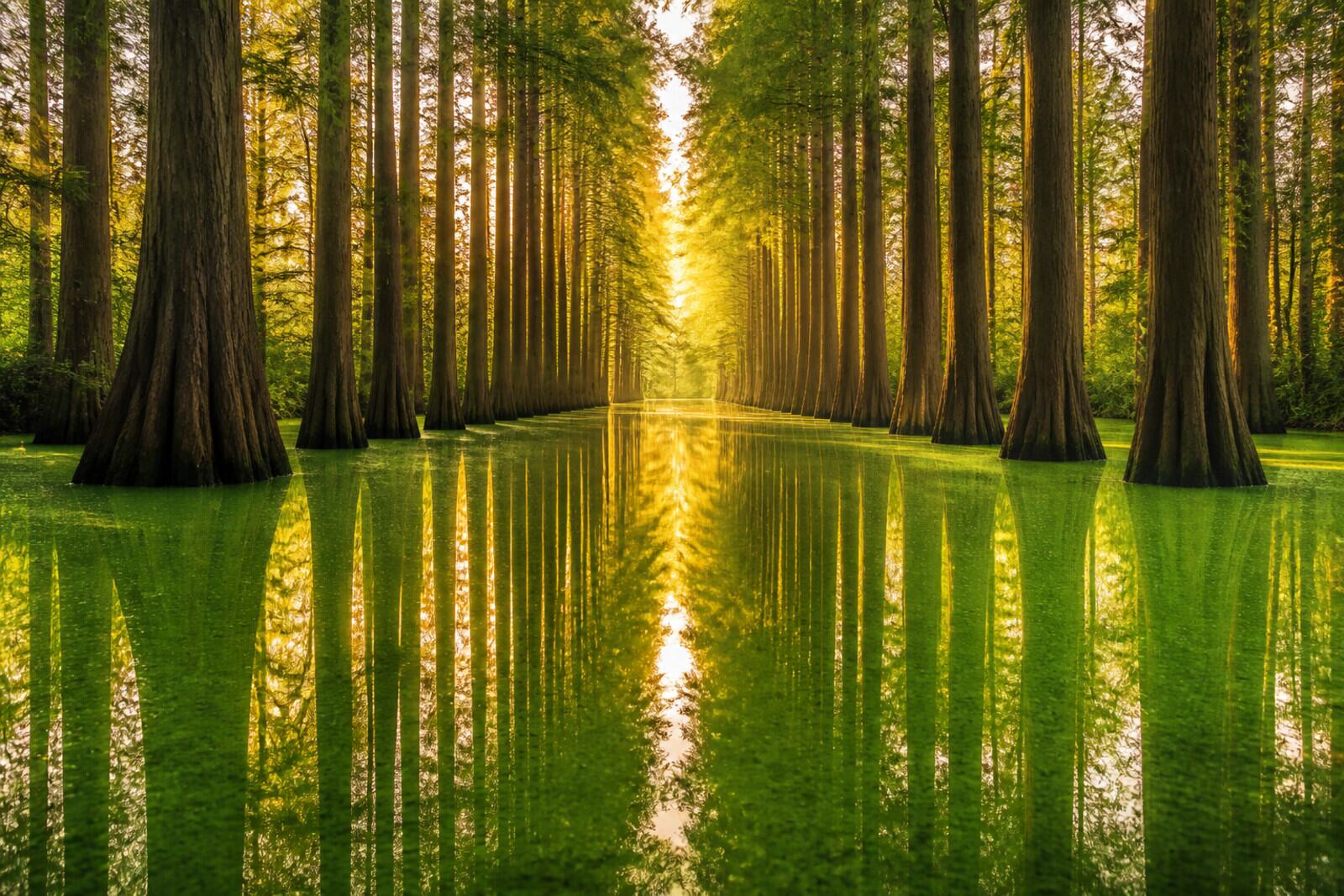
The image everyone comes for is the reflection: a bank of metasequoia trunks standing in flat, opaque green water, mirrored so cleanly that it is hard to tell where the trees end and the reflection begins. To get it, you need two things the crowds rarely have together — a still surface and a low, patient angle. Crouch down so your lens is close to the waterline and the reflection stretches toward you; the closer to the surface you shoot, the deeper and more symmetrical the mirror reads.
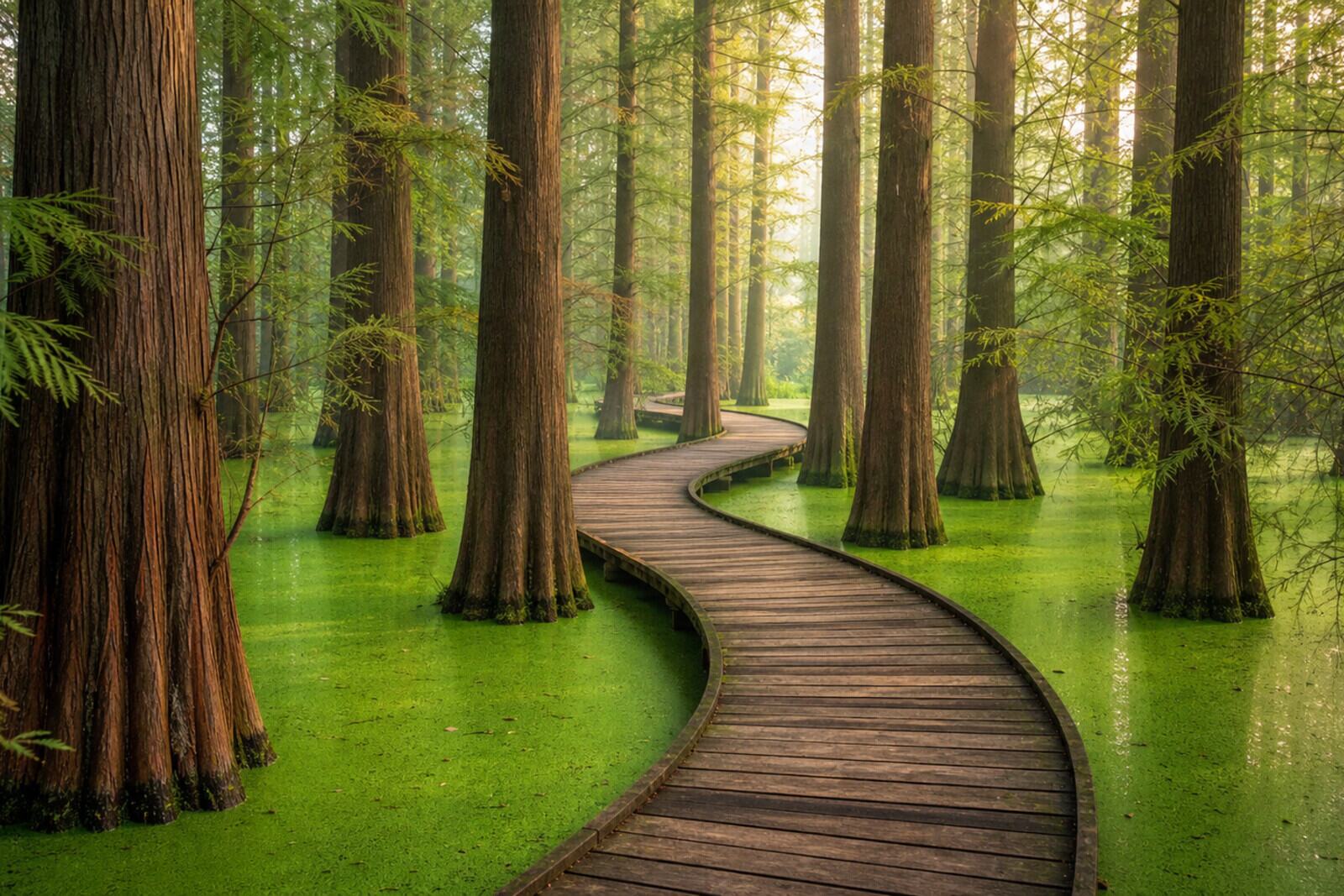
The boardwalks are the other reliable composition. Rather than fighting them, use them: a walkway running diagonally into the trees gives you a natural leading line and a sense of depth that a flat wall of trunks never will. And do not overlook scale — a single person, small in the frame, turns a pretty pattern into a place someone can imagine standing in. One quiet figure at the far end of a boardwalk often carries more than a perfectly empty scene.
Light, and why overcast can beat blue sky
Come early. The first hour or two after opening is when the air is calmest, the water most likely to be glass, and the crowds thinnest — all three matter more than the exact quality of the sun. On a bright, cloudless day the midday light is actually the enemy here: it puts hard highlights on the surface, blows out the greens, and flattens the trees. We would rather have soft, even cloud.
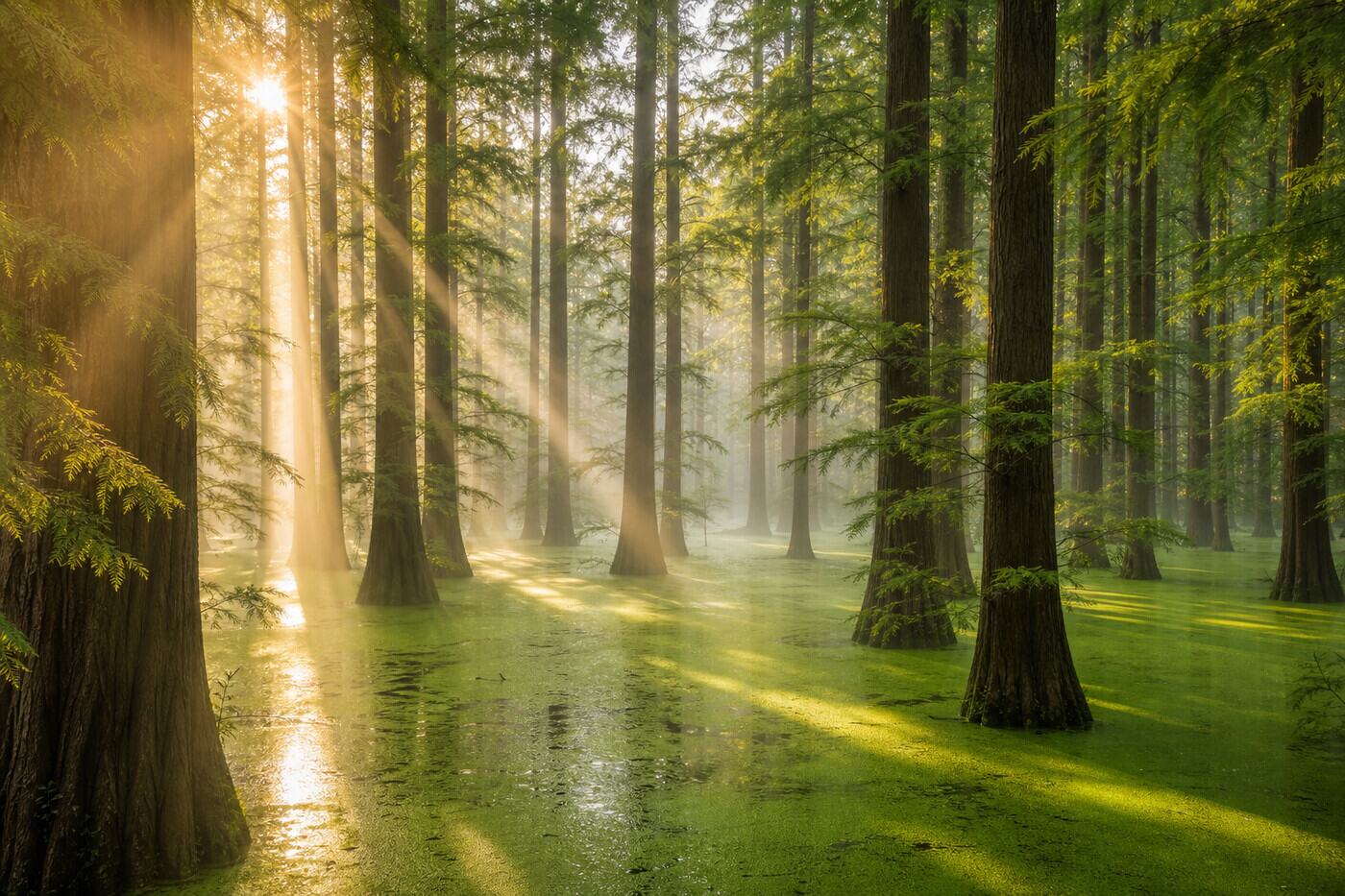
Counter-intuitively, an overcast or lightly misty morning tends to render the water at its most matcha-like. Diffused light saturates the green, hides the surface glare, and lends the trees a hushed, layered depth as they fade into any haze. If you wake up to flat grey skies, that is not a wasted trip — it may be the best card the place can deal you. What genuinely disappoints is wind: even a light breeze breaks the reflection into ripples and there is no fix but patience, so build in time to simply wait for the surface to settle.
A colour we will not oversell
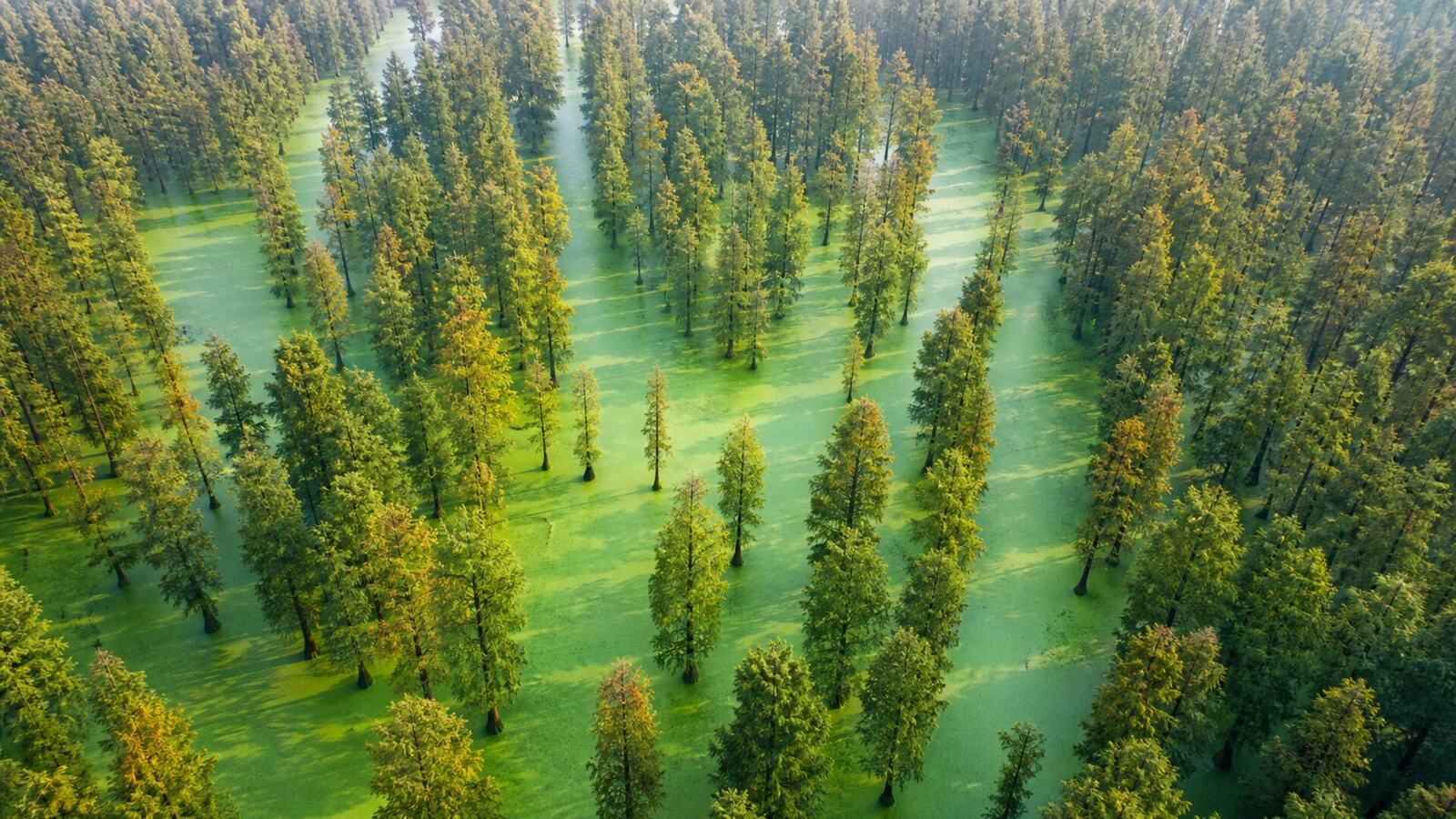
The green is real, but it is seasonal and it is not guaranteed. It comes from tiny floating water plants and algae, it is strongest in the warmer months, and it can be muted, patchy, or simply absent depending on the season, the recent weather, and water management. In the cooler months the same view can read as clear water among bare trunks — still handsome, but not the tea-green of the viral photos. Check very recent images for your dates before you build a whole trip around the colour, and treat any single lucky morning as a bonus rather than a promise.
Shoot it lightly, and leave it as you found it
You do not need much gear. A phone or a single lens is plenty; the composition and the timing do the heavy lifting, not the kit. If you carry a camera, a polariser can help you cut surface glare and pull the green through, but it is optional. What matters far more is restraint on the ground: this is a managed, living place, and the fragile edges where water meets planting are exactly what makes the pictures. Stay on the boardwalks and behind the barriers, do not wade in or trample the banks to chase an angle, and keep out of other people’s long-exposure frames where you can. The best photograph here is one that leaves the spot intact for the next person waiting for the water to go still.
Keep planning
Start hereMatcha Lake Hangzhou guideStart with the main guide to the green-water forest near Hangzhou.- Best time for the greenSeason and light.
- The water forest guideWhat you’re shooting.
- How to get thereReach the good spots.